
Valve Inspection
Valves are the heartbeat of industrial systems — controlling flow, pressure, temperature, and safety across steam, air, water, oil, chemical, and gas networks. Yet, despite their importance, they often remain under‑monitored. Traditional inspection methods frequently overlook internal leakage or seat wear, resulting in wasted energy, process inefficiencies, and costly maintenance.
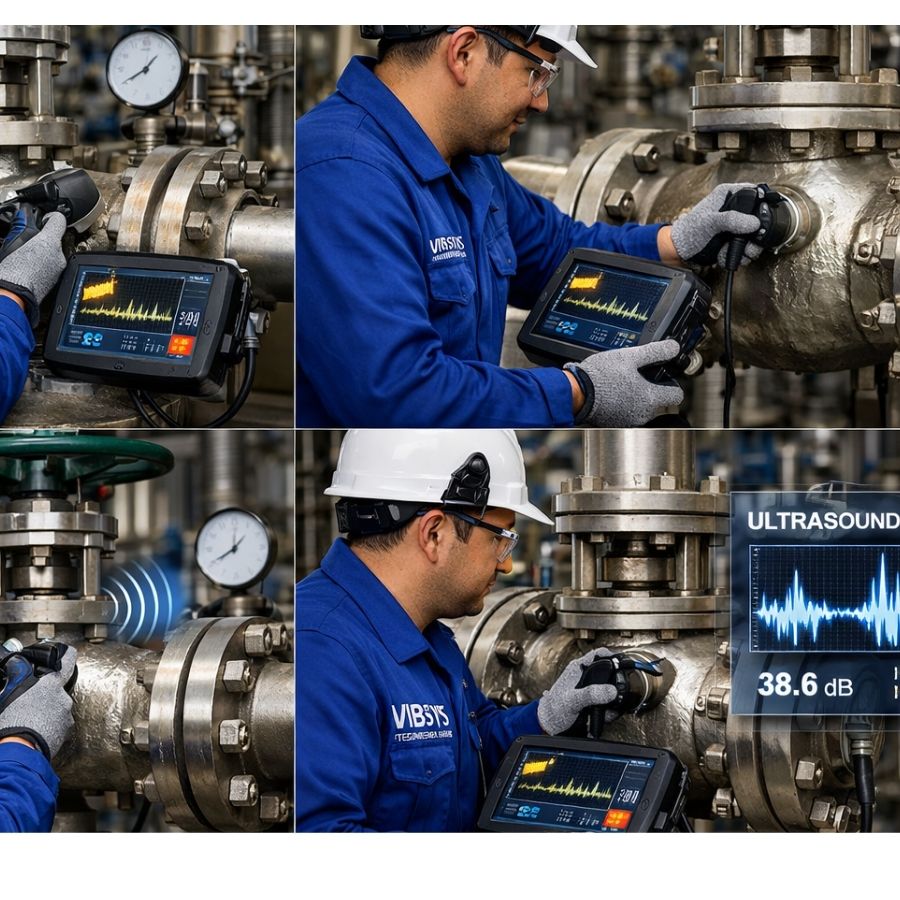
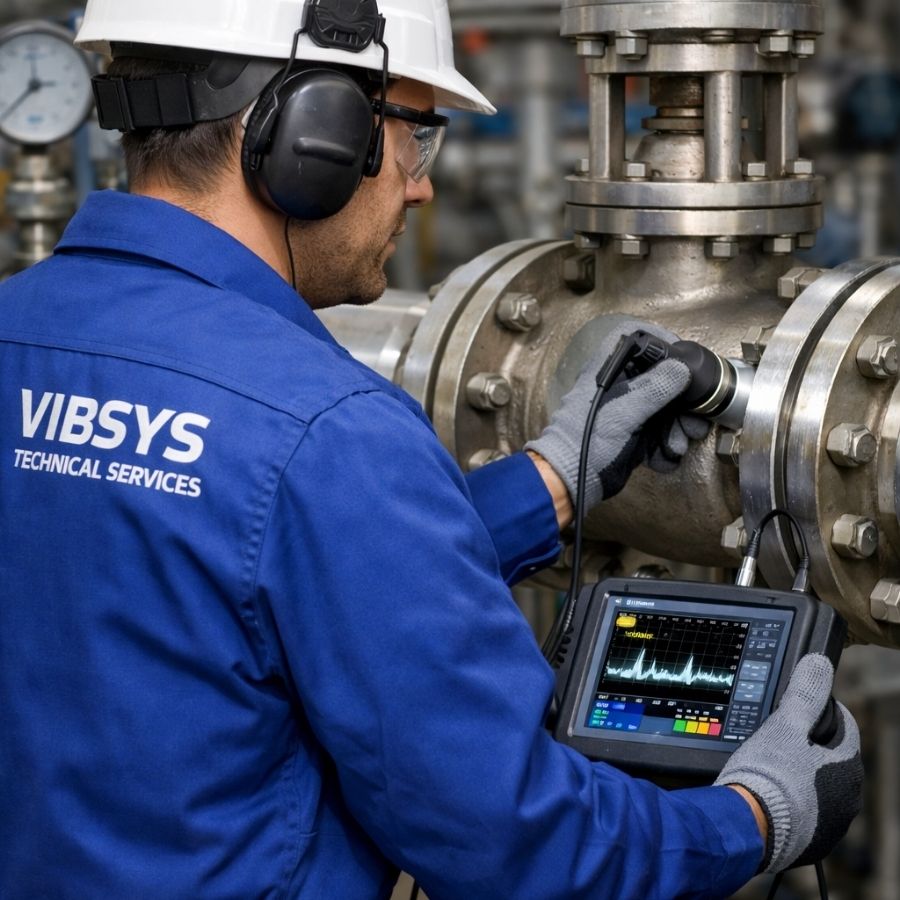
At Vibsys Technical Services, we use ultrasound technology to transform valve inspection. This non‑intrusive, in‑service approach detects turbulence, leakage, friction, and blockage without dismantling equipment or interrupting operations.
Understanding Valve Failures
Valves can fail in several ways — from internal leakage caused by worn seats to sticking or seizing due to corrosion or debris. Bypass leaks, backflow, cavitation, and improper sizing also contribute to inefficiency and safety risks. Each of these issues can lead to energy loss, unstable pressure control, contamination, or premature wear.
Limitations of Traditional Inspection
Conventional methods such as visual checks, infrared thermography, vibration monitoring, and pressure readings often provide incomplete or misleading results. They may require shutdowns, fail to detect internal faults, or only reveal problems once they’ve escalated.
Ultrasound inspection overcomes these limitations by listening to what the valve itself reveals — the high‑frequency acoustic signals generated by turbulence, flow, and mechanical movement.
The Ultrasound Advantage
Ultrasound inspection is fast, precise, and safe. It allows technicians to evaluate valves while systems remain in operation, detecting both internal and external leaks, identifying seat wear, and confirming valve movement. It works effectively through insulation and cladding, providing quantifiable, repeatable data that can be trended over time for predictive maintenance.
How It Works
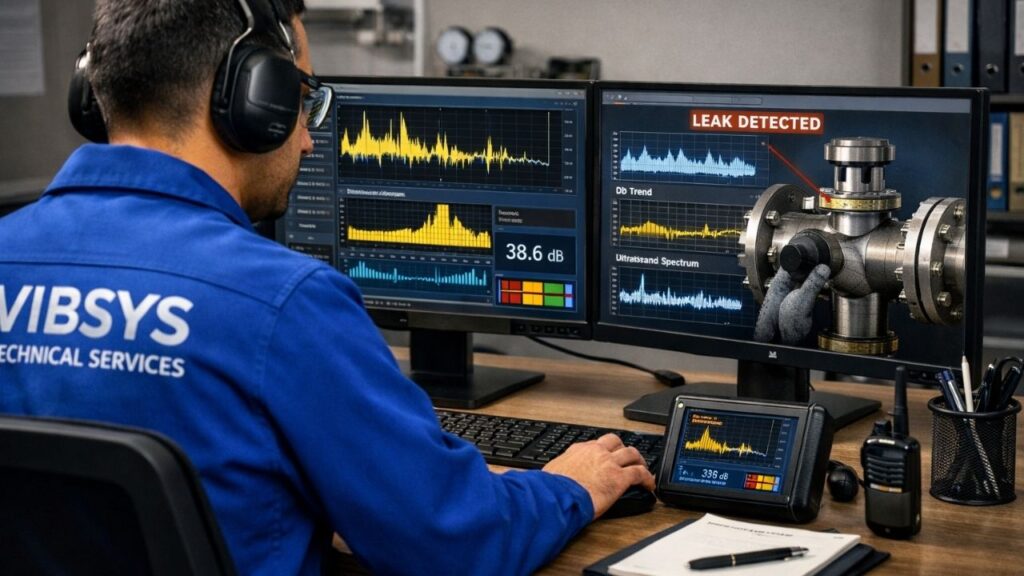
Every valve produces unique acoustic patterns. By analyzing these signals, Vibsys experts can pinpoint issues such as leakage, blockage, cavitation, or sticking. A steady turbulence sound when a valve should be closed indicates leakage; irregular or delayed actuation sounds suggest sticking; and chaotic waveforms often reveal cavitation or flashing.
This diagnostic precision enables maintenance teams to act proactively rather than reactively.

Proven Results
Across industries, ultrasound valve inspection has delivered measurable benefits. Refineries have recovered significant energy losses by detecting steam leaks. Pulp and paper mills have reduced production interruptions by identifying faulty valves. Chemical plants have prevented cross‑contamination and safeguarded product quality.
Benefits for Every Level
For maintenance teams, ultrasound means faster checks and fewer outages. For safety and compliance officers, it supports leak prevention and emission tracking. For management, it translates into energy savings, reduced downtime, and stronger return on investment.
Conclusion
In valve inspection, the most powerful tool is the one that detects what you can’t see or feel. Traditional methods leave blind spots — missing leaks, seat damage, and mechanical issues until they escalate.
Ultrasound inspection by Vibsys Technical Services provides real‑time, quantifiable insights that keep valves operating safely, efficiently, and reliably.