Transforming Leak Detection: The Power of Ultrasound for Compressed Air, Gas, and Vacuum Systems
Leaks in compressed air, gas, and vacuum systems waste energy, reduce efficiency, and create safety risks. Traditional methods like soap solutions or pressure sensors are slow and often miss small leaks. Ultrasound technology changes the game by enabling rapid, accurate, and non‑intrusive leak detection during live operations.
Typical Leak Points and Consequences
Compressed Air
Common leak points: couplings, hoses, valves, pipes, flanges
Consequences: energy waste, pressure drop, higher operating costs
Industrial Gas
Common leak points: fittings, welds, seals, control valves
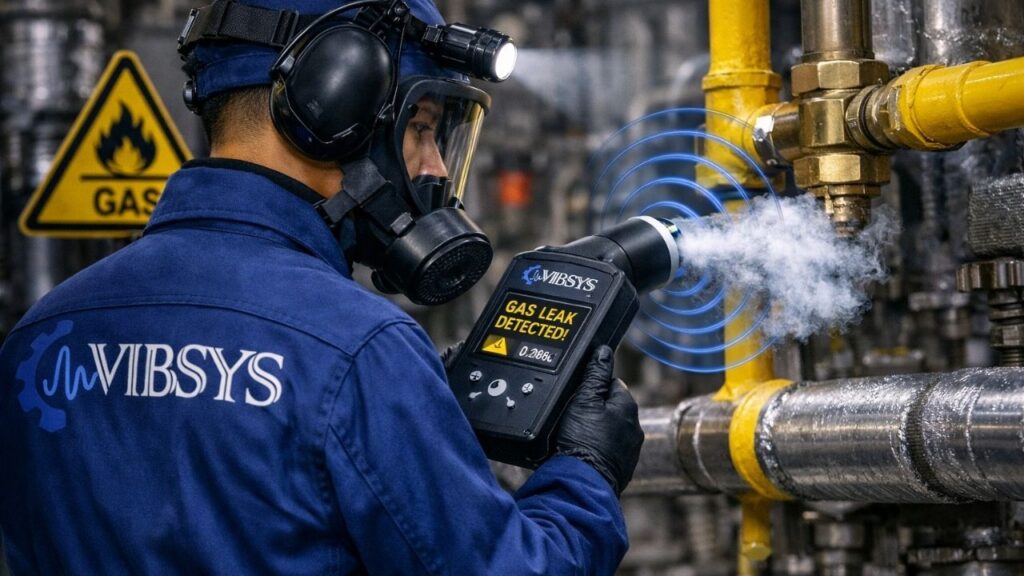
Consequences: safety hazards, explosion risk, product loss
Vacuum Systems
Common leak points: gaskets, seals, joints, connections
Consequences: process instability, contamination, increased energy use
How Ultrasound Detects Leaks
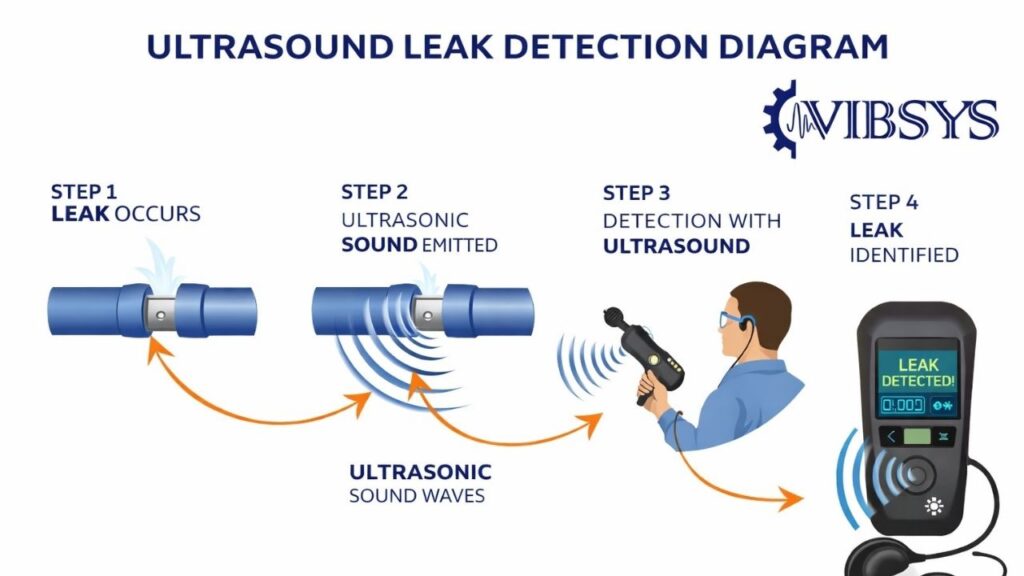
Escaping pressurized fluid or incoming air in a vacuum creates turbulence that generates ultrasonic sound waves (20–100 kHz).
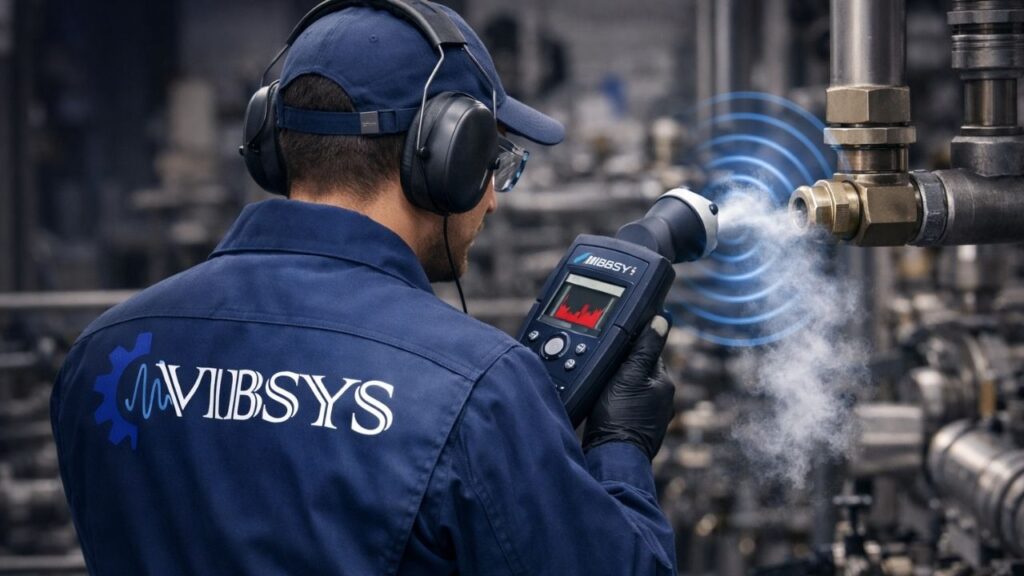
Portable detectors amplify these signals while filtering ambient noise.
Highly directional waves allow precise pinpointing of leak locations, even across several meters.
Advantages of Ultrasound Over Traditional Methods
Ultrasound: Fast, accurate, works in noisy environments, detects both pressure and vacuum leaks, non‑invasive, quantifiable results.
Soap Solution: Cheap but time‑consuming, misses small or inaccessible leaks, unsafe for hot/pressurized parts.
Pressure Decay Testing: Precise if isolated, but disruptive and unreliable for microleaks.
Listening Stick: Finds only large leaks, ambient noise masks smaller ones.
Infrared Thermography: Requires temperature difference, less reliable for compressed air/vacuum.
Gas Tracer/Dye: Accurate but expensive, slow, and requires system modification.
Key Benefits of Ultrasound Leak Detection
Speed & Efficiency: Detects 100+ leaks in a single day.
Versatility: Works across compressed air, process gases, and vacuum systems.
Live Operation: No need to shut down equipment.
Safety: Early detection of flammable/toxic leaks reduces risk.
Quantifiable Results: Estimates leak size and energy cost.
Energy Savings: Plants recover 20–35% annually.
Ease of Use: Operators become proficient quickly.
Unique Value for Vacuum Leaks
Traditional methods struggle with silent inflows.
Ultrasound makes the invisible audible, cutting detection time from hours to minutes.
No need for tracer gases, disassembly, or pressurization.
Real‑World Impact
Leak campaigns uncover energy waste worth tens or hundreds of thousands annually.
Plants achieve faster maintenance cycles, higher productivity, and longer equipment life.
In safety‑critical gas installations, ultrasound enables immediate detection and repair before hazardous concentrations build up.
Conclusion
Ultrasound technology delivers unmatched speed, accuracy, and flexibility across compressed air, gas, and vacuum systems. It surpasses traditional methods in safety, efficiency, and cost‑effectiveness, driving sustainable operations and higher plant reliability.